Milwaukee’s Scars
A Walking Guide for People Who Notice Things
Go for a walk. Look at some buildings. Discover that Milwaukee has spent an astonishing amount of time demolishing things, regretting it, and occasionally building something interesting in their place.
Before we begin
I have a confession.
I am absolutely the kind of person who will stop in the middle of a sidewalk to stare at an apartment building because something about its windows looks weird.
I will then spend fifteen minutes trying to figure out when it was built, who lived there, and why there’s a door on the third floor that doesn’t appear to go anywhere.
This is apparently what I do for fun now.
Welcome to Cream City Flâneur, my extremely unofficial guide to the city I’ve called home for most of my adult life.
This particular walk grew out of Forced Perspective, an evening wandering around my neighborhood when I accidentally discovered how much of Milwaukee had been demolished for a freeway that never got built.
And then, naturally, I started remembering all the places I’ve lived, wondering whether I still belong here, and talking to a cat in somebody’s window.
So this is the historical companion.
It’s not a conventional tourist guide. I’m not going to tell you where to get the best cheese curds or pretend every building has a life-changing lesson hidden inside it.
Some buildings are just fucking cool.
The route: Approximately 2 to 3 hours if you actually stop and look at things. Less if you’re one of those people who walks with a purpose. I don’t understand you, but I respect your choices.
The main route begins near Ogden and Jefferson, follows the old freeway corridor east, explores Burns Commons and Prospect Avenue, and loops back along Juneau.
There’s also an optional Humboldt Boulevard excursion, because I used to live in a spectacular old apartment and I’m making that everyone’s business now.
Ogden & Jefferson
The freeway that never arrived
Stand here for a minute and look east.
Today you’ll see apartments, shops, streets, sidewalks, and a fairly normal-looking neighborhood.
Now imagine a freeway running through it.
Not metaphorically. An actual freeway.
During the 1960s, Milwaukee planned an expressway system that would have encircled downtown. The Park East Freeway was supposed to continue east toward Lake Michigan, passing the northern edge of downtown and connecting with the proposed lakefront expressway system.
The project stopped in the 1970s, but not before a substantial corridor had been cleared.
Which means buildings were demolished for a road that never showed up.
Milwaukee eventually removed the elevated western portion of the Park East Freeway beginning in 2002. But the eastern stretch had been sitting around, waiting for a freeway, long before that.
The abrupt changes in building age, scale, and street layout. This isn’t one neighborhood built all at once. You’re standing where several versions of Milwaukee overlap.
I’ve walked through here hundreds of times without understanding what I was looking at.
Once you see the missing freeway, it’s kind of impossible to unsee.
The John Ernst Café
One of the buildings that stuck around
This is one of my favorite kinds of buildings: something that looks a little out of place because everything around it changed.
The building dates to 1935 and was home to the John Ernst Café, a longtime Milwaukee restaurant. The café’s roots on this site went back even further, although the present building is twentieth-century.
Look at the Tudor Revival details, the roofline, and the way it sits against its newer surroundings.
It has survived several rounds of neighborhood reinvention.
The older architecture against the redevelopment across the street.
I love a survivor. Especially one that looks like it has opinions about what happened to the neighborhood.
East Pointe Commons
The neighborhood Milwaukee put back
Here’s where the story gets interesting.
The land cleared for the proposed freeway eventually became the East Pointe neighborhood. Redevelopment began around 1990, bringing townhouses, apartments, condominiums, and retail back into a corridor that had spent years waiting for highway construction.
This was happening around the same time Milwaukee was starting to rethink the relationship between downtown, neighborhoods, and automobiles.
I moved here in 2000, right in the middle of that broader urban-redevelopment era.
I didn’t realize at the time how much it was shaping the way I saw cities.
The smaller blocks, residential entrances, sidewalks, and the effort to make this feel like a neighborhood rather than an isolated development.
You can rebuild a street grid. Rebuilding the neighborhood that once occupied it is a much more complicated proposition.
Burns Commons
A little green space with a complicated neighborhood around it
Keep heading east toward Burns Commons.
This is a good place to stop and look around because the landscape starts changing again.
Behind you is the redeveloped freeway corridor. Ahead of you are older residential streets and the beginnings of Prospect Avenue’s grand architectural collection.
And somewhere in the middle is The Hop.
Which brings me to a brief complaint.
I really wanted Milwaukee’s streetcar to become something bigger. There have been proposals for extensions, but the system remains much more limited than I’d hoped.
I can walk to a remarkable number of places faster than I can wait for the streetcar.
And I’m not even particularly trying.
Anyway.
How the public space connects older streets to newer development, and how many different architectural eras are visible from one spot.
Milwaukee is very good at imagining ambitious infrastructure. Following through is apparently a separate department.
The Ghost of the Layton School of Art
We demolished WHAT?
This one makes me mad.
The Layton School of Art opened a purpose-built campus on Prospect Avenue in 1951.
In 1970, the building was demolished for the proposed freeway extension.
Yes. Milwaukee demolished an art school to make room for a freeway that was never completed.
The school relocated and eventually closed in 1974. Its educational legacy continued through what became the Milwaukee Institute of Art & Design.
Now stand here and think about that for a minute.
A building devoted to art and education, gone after less than twenty years.
For a road.
That never came.
Fuck.
The present-day development and the surrounding buildings. The absence is the historical landmark here.
Sometimes preservation history isn’t about the beautiful thing you’re looking at. It’s about the thing you can’t.
The Lion House
Milwaukee had money, and it wanted everyone to know
Now we get to the good stuff.
The Lion House, historically the Edward Diederichs House, was built around 1855.
That’s before the Civil War.
It was designed to evoke European villas and is one of the oldest high-style houses in the surrounding historic district.
Look at the columns, the proportions, and, obviously, the lions.
I love that somebody built this house in what was then a developing part of Milwaukee and decided it needed to look like a grand European residence.
Absolutely no restraint.
The house’s classical detailing and how dramatically it differs from the apartments and towers nearby.
I’ve spent years staring at houses like this and wondering what it would be like to live in one.
Then I remember how much cleaning would be involved.
First Ward Triangle
The neighborhood that survived
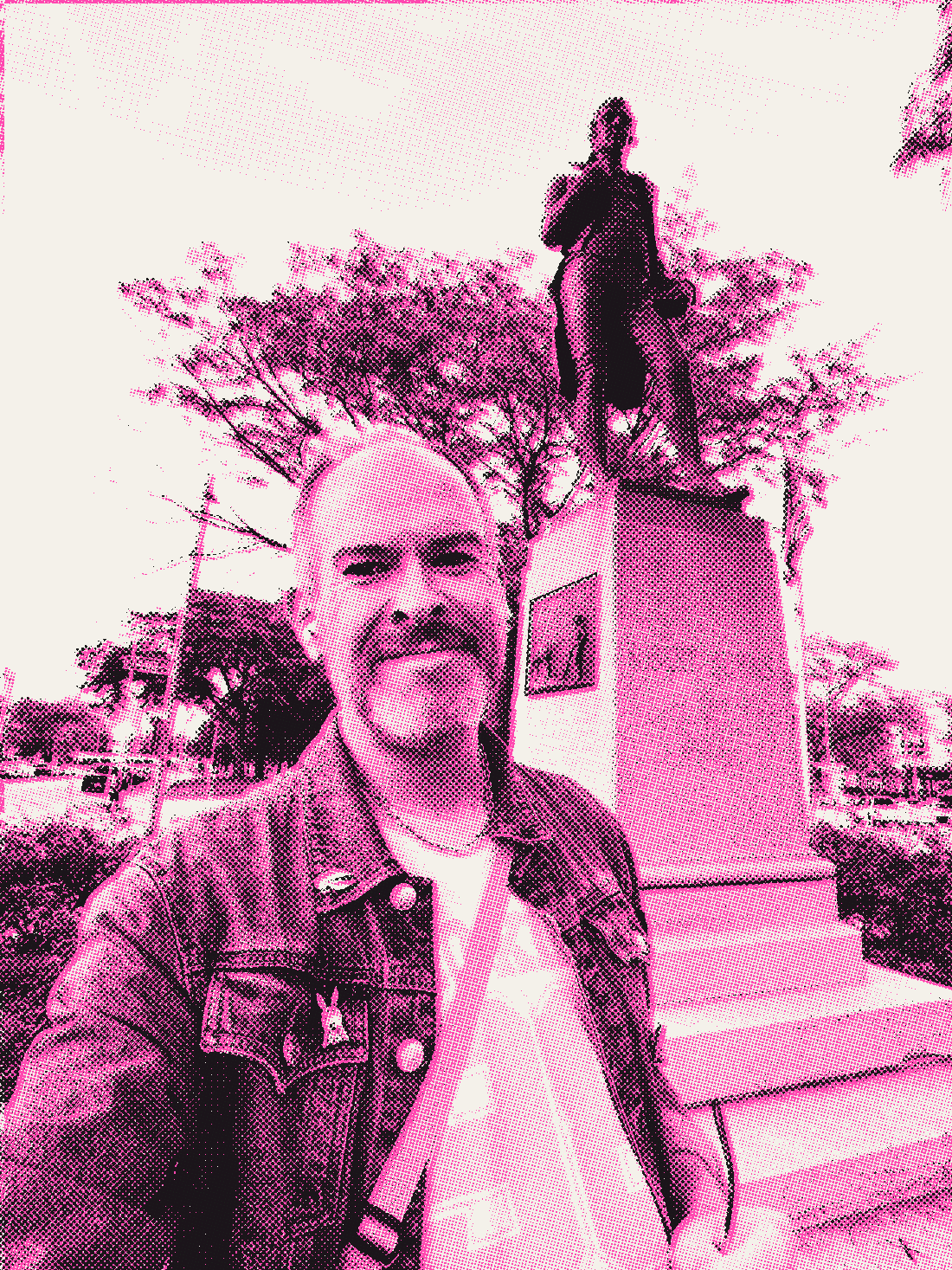
This little collection of historic houses is one of my favorite places in Milwaukee.
The First Ward Triangle Historic District contains residences built for some of the city’s wealthy and influential nineteenth-century families.
The area was platted in 1847. Over the following decades, it became part of Milwaukee’s fashionable residential district near the lake.
There’s an extraordinary mix of architectural styles here, including Italianate, Gothic Revival, Queen Anne, and Classical Revival.
The triangular park contains a statue of Scottish poet Robert Burns, installed in 1909.
I stopped and took a picture of it for a friend from Scotland.
Because sometimes that’s all the reason you need.
The differences between neighboring houses. The rooflines, materials, porches, windows, and elaborate little architectural decisions.
You can spend twenty minutes on this block and not get bored.
Well, I can’t.
Your results may vary.
Juneau Park
A city that remembers some things and forgets others
Head south toward Juneau Park.
This is one of those places where Milwaukee suddenly opens up and reminds you that Lake Michigan is right there.
The lakefront is a big part of why Milwaukee became Milwaukee. But the city has spent generations debating what should be built near it, how people should reach it, and who gets to enjoy it.
The proposed freeway would have dramatically changed the relationship between these neighborhoods and the lakefront.
Instead, we’ve still got a public park and an extraordinary collection of buildings along the bluff.
The change in elevation, the lake, and the contrast between open public space and the dense residential neighborhood immediately west.
Sometimes the most important thing a city does is decide not to build something.
Even if it takes a while to arrive at that decision.
The Knickerbocker on the Lake
When living in a hotel was a whole lifestyle
I have a thing for residential hotels.
The Knickerbocker opened in 1929 as an apartment hotel, combining private residences with the services and amenities associated with hotel living.
This was a fashionable way to live in the early twentieth century, especially for people who wanted the convenience of a central address without maintaining a large private home.
The building later became condominiums.
I find the whole concept fascinating.
A private apartment, shared amenities, people coming and going, a restaurant downstairs, and the city right outside your door.
Honestly, the concept still sounds pretty appealing.
The building’s Classical Revival architecture, height, and relationship to the smaller historic houses nearby.
Apparently my fascination with mixed-use living arrangements predates my understanding of what mixed-use development actually means.
The Astor Hotel
Another version of the same idea
A block west is the Astor, another historic residential hotel.
Built in 1918 and later expanded, it offered a version of urban living designed around convenience, services, and proximity to downtown.
Its history also captures a broader shift in Milwaukee’s housing.
Large private houses gradually gave way to apartment buildings, residential hotels, and eventually modern towers.
The neighborhood didn’t stop being residential.
It just changed what residential living looked like.
The building’s vertical proportions and the difference between its design and the Knickerbocker.
I think part of what fascinates me about these places is that they represent different ideas of home.
And I spend an unreasonable amount of time thinking about what home is supposed to look like.
Humboldt Boulevard
The apartment I still think about
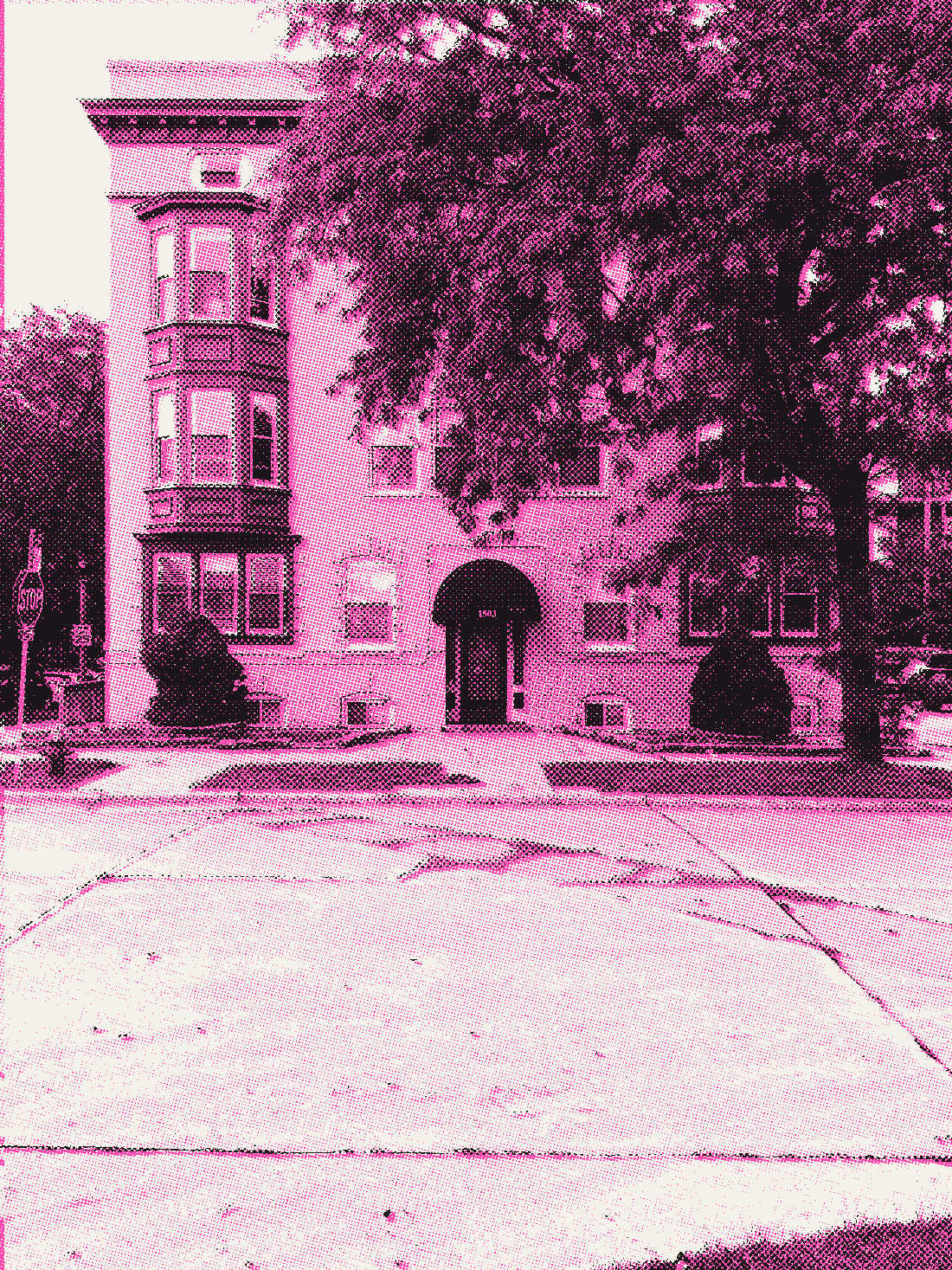
This is a separate excursion, not part of the main walking loop.
From 2005 to 2007, I lived in apartment six on the third floor of this building.
And I loved it.
The building was constructed in 1907, designed by Fernekes & Cramer, and historically known as the John Frank.
It’s documented in the Wisconsin Architecture and History Inventory.
I had absolutely no idea when I lived there.
My apartment had a parlor, dining room, bay window, balcony, three bedrooms, and a butler’s pantry.
I lived in the butler’s pantry.
Of course I did.
The floor plan was ridiculous and wonderful, and I still remember it twenty years later.
What I didn’t understand then was how close this part of the East Side had been to the proposed freeway corridor and the neighborhood disruptions that came with it.
I don’t know exactly how close the freeway would have passed to my building. I’m not going to pretend I do.
But discovering the surrounding history made me think about that apartment differently.
The brickwork, the scale of the old apartment buildings, and the residential streets around Humboldt and Lyon.
Sometimes the most interesting historical landmark in a city is the place where you used to keep your shit.
A few thoughts before you go home
Here’s what I hope you take away from this walk.
Milwaukee isn’t one city.
It’s a whole collection of cities built on top of each other.
The nineteenth-century city of mansions and grand houses. The early twentieth-century city of apartment hotels and streetcars. The mid-century city that thought freeways were the answer to everything. The city that tore some of them down and started putting neighborhoods back together.
And the city we’re still figuring out.
You don’t have to know a thing about architecture to enjoy this walk.
You just have to be curious.
Look up. Look down the side streets. Notice when one building doesn’t quite fit with the others.
Ask why.
And if you see a cat in somebody’s window, say hello.
I always do.
Let Joy Reign.
- City of Milwaukee, Park East Freeway: History and Removal and Park East Redevelopment.
- City of Milwaukee Historic Preservation Commission, First Ward Triangle Historic Designation Study.
- Wisconsin Historical Society, Architecture and History Inventory, John Ernst Café, John Frank Apartments, and Astor Hotel.
- National Park Service, Knickerbocker Hotel National Register documentation.
- Urban Milwaukee, reporting on the former Layton School of Art site and the East Pointe redevelopment.